
South Dakota State Income Tax Overview
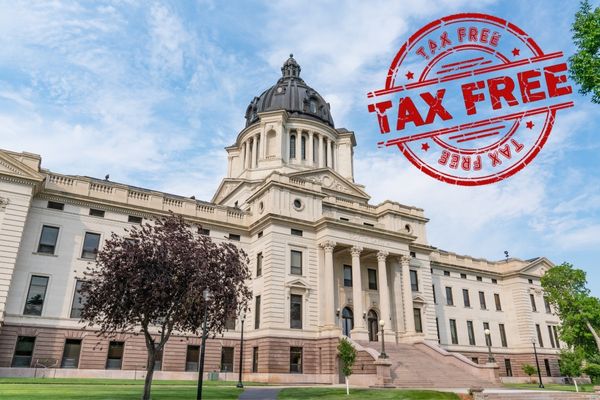
South Dakota is one of a small number of states that does not impose a personal income tax on residents. If you live or work in South Dakota, you do not file a South Dakota state income tax return, and there is no South Dakota equivalent to a Form 1040.
That said, no state income tax
does not mean no taxes.
South Dakota funds state and local government through other taxes, including sales taxes, property taxes, and business-related taxes.
Understanding how South Dakota collects revenue, and how that compares to other states, is important whether you are moving to South Dakota, already living in the state, or considering relocating elsewhere.
This page explains how South Dakota's tax system works, what taxes residents do and do not pay, and how South Dakota compares to other states from a tax perspective.
Key takeaways at a glance:
- South Dakota does not tax personal income
- No state income tax forms or filing requirements
- No state income tax withholding on paychecks
- Federal income taxes still apply
Does South Dakota Have a State Income Tax?
No. South Dakota does not have a state-level personal income tax.
Residents of South Dakota do not pay state income tax on wages, salaries, self-employment income, retirement income, or investment income. There is also no South Dakota state income tax return to file and no state income tax withholding taken from paychecks.
This is not a temporary policy or a tax incentive that changes year to year. South Dakota simply does not levy a personal income tax, and it has maintained this policy for decades.
It is important to note that this applies only to state income taxes. South Dakota residents are still required to file and pay federal income taxes with the IRS, just like residents of every other state.
How South Dakota Raises Revenue
South Dakota's lack of a personal income tax does not mean the state operates without revenue. Instead of taxing wages and salaries, South Dakota relies more heavily on consumption-based taxes, property taxes, and business taxes to fund state and local government.
Understanding this trade-off is important, especially for people moving to South Dakota from high–income-tax states.
Sales and Use Taxes
Sales and use taxes are a primary source of revenue for South Dakota.
- South Dakota imposes a statewide sales tax on most goods and many services.
- Municipalities may impose additional local sales taxes.
- Sales tax applies broadly, meaning residents tend to pay more tax when they spend, rather than when they earn.
For households that spend a large portion of their income, this can offset some of the benefits of having no income tax.
Property Taxes
Property taxes in South Dakota are imposed at the local level, not by the state directly.
- Rates vary by county and municipality.
- Property taxes fund local services such as schools, public safety, and infrastructure.
- Property taxes are often a significant ongoing cost for homeowners.
For homeowners, especially retirees and long-term residents, property tax planning matters.
Corporate and Business Taxes
While individuals are not subject to state income tax, South Dakota does collect revenue from businesses.
- South Dakota does not impose a traditional corporate income tax.
- The state relies on sales taxes, contractor excise taxes, and other business-related taxes.
- Certain industries may be subject to industry-specific taxes and licensing fees.
This distinction is important for entrepreneurs comparing South Dakota to other low-tax states.
Other State and Local Taxes
South Dakota also collects revenue through:
- Fuel taxes
- Alcohol and tobacco taxes
- Tourism-related taxes and fees
- Various state and local fees and assessments
Tourism and consumer spending play an important role in South Dakota's revenue structure.
How long do you have to live in South Dakota to avoid taxes?
Residency for tax purposes is demonstrated by whether or not an individual has taken steps to move into South Dakota, and, sever residency in a previous state or country. You may still need to file a full-year, part-year, or non-resident income tax return in your current state for the year you move to South Dakota.
If you are considering moving to South Dakota, remember that personal income taxes are just part of the overall tax burden. In the state of South Dakota, however, the overall cost of living is relatively low compared to other high tax states such as California, New Jersey, and New York.
Bottom line: South Dakota taxes spending, property, and business activity rather than personal income. For many residents, especially high earners and retirees, this structure can be advantageous, but it is not tax-free living.
Last updated: January 17, 2026
References:
- South Dakota Department of Revenue. State of South Dakota. Retrieved January 17, 2026.
- Business Tax Information. State of South Dakota, Department of Revenue. Retrieved January 17, 2026.